
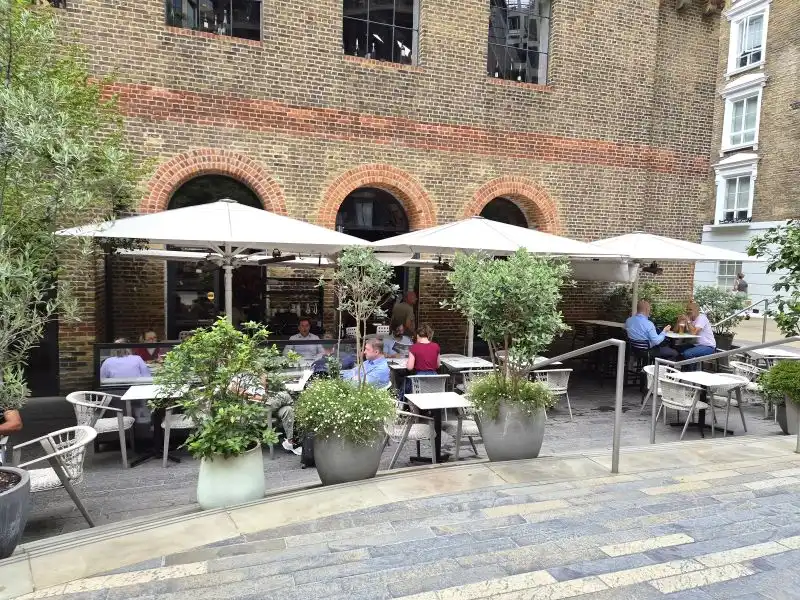
Good heavy-duty parasols include the Verona and Schattello for busy hospitality terraces, the Malaga for seating areas needing a clear space beneath the canopy, the StrongWind and Typhoon for more exposed sites, and the Albatros for extensive coverage. The best choice depends on where the parasol will stand, how much space it must cover and how staff will use it each day.
“Heavy-duty” describes more than a thick pole. A commercial parasol needs a suitable frame, dependable opening mechanism, appropriate canopy fabric and secure fixing. A large, strong parasol on an unsuitable base still presents a problem. Likewise, a model built for a sheltered courtyard should not be chosen solely on appearance for an exposed coastal terrace.
Which heavy-duty parasols suit different spaces?
The following models appear in Morton Commercial Parasols’ sitemap. Each has a distinct use, so comparing the layout and conditions of your space is more useful than ranking them from cheapest to most expensive.
Verona: a straightforward choice for larger terraces
The Verona Heavy Duty Commercial Parasol suits venues seeking substantial coverage without built-in heating or lighting. Its square and rectangular canopies range from 3m to 6m across the available versions. A twin-strut system supports the spokes, while the XL models use a larger mast than the standard versions.
Staff open and close the Verona with a push-pull rod. Its telescopic closing action provides clearance above tables, a practical detail when a restaurant or pub leaves furniture in place overnight. The range of shapes also helps with planning: a rectangular canopy often follows a long seating row more closely than a square one.
The Verona makes sense where the priority is durable shade and simple daily operation. Check the intended fixing and the space needed around the canopy before deciding on a size. A 6m model covers considerably more area than a 3m model, but also needs an installation suited to its dimensions and location.
Schattello: flexible coverage around tables
The Schattello Heavy Duty Commercial Parasol offers square, rectangular and octagonal canopies, including an eccentric version with the mast positioned away from the centre of the covered area. This gives planners options for terraces with fixed tables, walkways or awkward boundaries.
Its reinforced spokes remain under tension to keep the fabric taut. Staff use a removable crank handle, and the telescopic mechanism closes above standard-height tables. For a café or restaurant opening and closing parasols daily, these details matter as much as the maximum canopy size. They reduce the need to rearrange furniture whenever the weather changes.
Heating and LED lighting are available as options. Decide whether your venue needs them before comparing configurations, since an equipped parasol serves a different brief from one used for daytime shade. Morton also offers different fixing arrangements. The suitable choice depends on the ground beneath the terrace and whether the parasol needs to move.
Malaga: a cantilever option for unobstructed seating
A centre pole often fits naturally between tables. On some terraces, the pole would interrupt the seating plan or a pedestrian route. The Malaga Cantilever Parasol places its mast beside the shaded area, leaving the space beneath the canopy completely clear.
Morton builds the Malaga in its Gloucestershire workshop. The model uses an aluminium mast and frame with stainless steel fittings. Its gas-assisted opening mechanism supports regular operation. When closed, the canopy retracts towards the mast rather than hanging over the seating area.
A single mast supports configurations with one, two or four canopies, each operated independently. This arrangement deserves consideration for a long terrace or several adjoining seating zones. The mast position and fixing still need careful planning. Moving the pole out of the shaded area does not remove the space required for the mast, base or canopy as it opens and closes.
StrongWind: for a more exposed position
Wind exposure changes the selection process. A rooftop, hillside terrace or coastal site needs closer attention to the specific model, canopy size and fixing. The StrongWind Windproof Parasol is designed for such locations. Morton states a wind tunnel tested rating of up to 102 km/h, alongside reinforced aluminium spokes and a substantial mast.
Read a wind figure in the context of the proposed configuration. Ask which canopy size, installation method and operating conditions the figure covers. A published rating does not mean staff should leave a parasol open in every storm. The instructions for the selected configuration should determine when to close it.
StrongWind is available in sizes up to 6.5m, with optional heating, lighting, gutters and side curtains. Those additions suit some hospitality plans, but exposure and secure installation remain the first questions. A shelter arrangement only works well when its fixings and day-to-day use match the site.
Typhoon: substantial construction and a PVC canopy
The Typhoon Windproof Parasol is another option for demanding locations. Its construction includes a large mast, reinforced spokes, stainless steel fittings and a telescopic closing system. Staff operate it with a removable crank handle.
One distinction is its PVC canopy fabric. Morton describes the membrane as waterproof, fire resistant and easy to clean. Those properties make the fabric worth examining where a venue needs more than sun shade, particularly if keeping tables dry is part of the brief. Check the precise canopy and installation specification for the site rather than treating the word “windproof” as a guarantee against all conditions.
Typhoon suits buyers prepared to assess a substantial parasol as part of the wider terrace installation. Its frame, canopy and fixing all need to work together. For a sheltered space needing ordinary daytime shade, a less specialised model might answer the brief without the extra scale or fabric specification.
Albatros: wide coverage from one structure
The Albatros Huge Commercial Parasol addresses a different problem: covering an extensive area with a large canopy. Morton lists sizes up to 10m. Its reinforced spokes, substantial mast, stainless steel fittings and telescopic closing mechanism reflect the demands of operating a canopy on this scale.
A single large parasol might suit an open hotel terrace or broad dining area where several smaller canopies would leave gaps. Yet the largest possible canopy is not automatically the best layout. Several parasols give staff more control over which tables receive shade, and they might fit around doors, trees or changes in ground level more easily.
Before choosing a large model, draw its open canopy onto a measured site plan. Include the mast, nearby buildings, access routes and any furniture left in place when the parasol closes. This reveals whether one broad canopy serves the seating arrangement or merely covers space people do not use.
What makes a heavy-duty parasol suitable for your site?
Start with the area where people sit, rather than the advertised canopy width. Observe where the sun falls during the hours the space is used. A parasol centred neatly on a patio might leave late-afternoon diners outside the shade. Canopy shape and mast position affect the useful coverage as much as size.
Next, examine exposure. Buildings, walls and trees influence how a terrace experiences wind, while open rooftops and waterside sites have fewer barriers. Compare the manufacturer’s guidance for the exact model and configuration with the conditions at your location. Ask how staff will monitor the weather and close the canopy when required.
Ground fixing deserves equal attention. A permanent anchor, bolted plate and movable pedestal place different demands on the surface beneath them. A base suitable for one canopy size should never be assumed suitable for a larger version. If the parasol will stand on decking, the strength of the structure below the boards matters alongside the visible fixing.
Finally, consider the daily routine. Who opens the parasol? Will tables stay in place beneath it? Where does the closed canopy sit? Will staff need access to clean or replace the fabric? A practical heavy-duty parasol fits the people and space around it. Its strength has value when the whole installation works as intended.
For most venues, the shortlist becomes clearer after measuring the seating area and identifying its exposure. The Verona and Schattello models address common terrace layouts, Malaga frees the space beneath its canopy, StrongWind and Typhoon merit a closer look at exposed sites, and Albatros serves much larger areas. Choose the configuration for the actual site, including its fixing and operating instructions.