
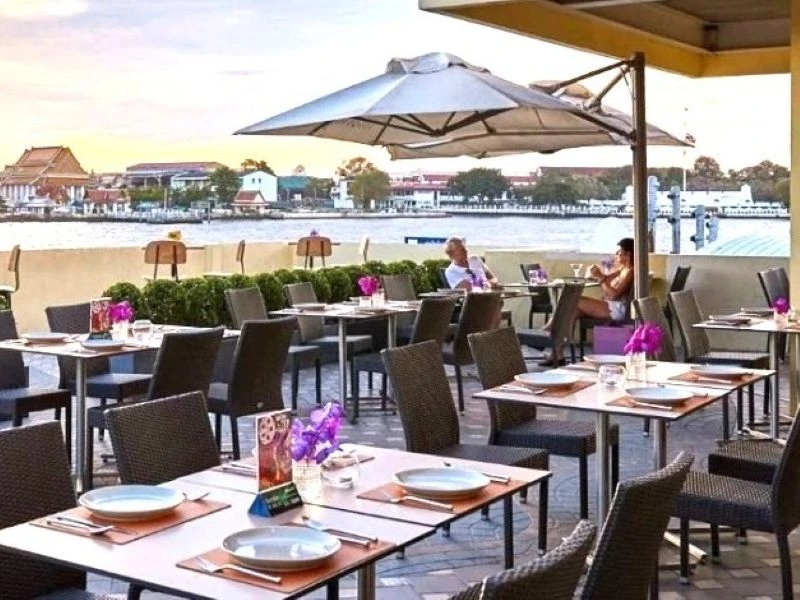
What are the pros and cons of a cantilever umbrella?
The main advantage of a cantilever umbrella is clear space beneath the canopy. Its pole stands to one side, leaving room for tables, chairs and people. The main drawbacks are the space needed for its base and arm, the importance of secure anchoring, and a higher purchase cost than many centre-pole umbrellas. The right choice depends on your layout, exposure to wind and how often you need to move the shade.
How does a cantilever umbrella work?
A cantilever umbrella, also called an offset parasol, supports its canopy from an arm attached to a side pole. A centre-pole umbrella supports the canopy from directly beneath. This difference changes where you place furniture and how you position the shade.
Some cantilever models tilt, rotate or move the canopy to follow the sun. Others offer fewer adjustments. Their bases also vary. A freestanding model needs a suitable weighted base, while a fixed installation needs an appropriate ground fixing. Always check the requirements for the particular umbrella and the surface beneath the proposed position.
What are the pros and cons of a cantilever umbrella?
Pro: More usable space beneath the canopy
Removing the central pole gives you greater freedom to arrange furniture. A dining table sits beneath the shade without an umbrella pole passing through its centre. People move around the table without stepping around a support in the middle of the seating area.
This layout is useful for outdoor dining, lounge seating and spaces where tables frequently change position. On a commercial terrace, the clear area beneath the canopy also makes the furniture layout easier to adapt for different group sizes. Morton’s cantilever parasol range shows several canopy arrangements for comparing how side-supported shade fits around furniture. You still need to account for the pole and base when planning routes around the seating.
Pro: Flexible positioning of the shade
A cantilever umbrella lets you place its support outside the area you want to shade. For example, the pole might stand beside a patio while the canopy reaches over a seating area. This helps where a pole in the centre would interrupt access or conflict with the furniture.
Adjustable models offer further control. Rotation changes the direction of the canopy, while tilt helps as the sun moves lower. Check the actual movements offered by each model. A rotating canopy and a tilting canopy solve different problems, and some umbrellas offer one without the other. Morton’s tilting parasols provide examples of the different adjustment options available.
Pro: A good fit for certain furniture layouts
Offset support suits large tables without umbrella holes, sectional seating and arrangements with several smaller tables beneath one canopy. The open space also gives you more choice when replacing furniture later.
Canopy size alone does not tell you how well the umbrella will cover the area. Look at the shape of the canopy and draw its footprint over your planned furniture layout. A rectangular canopy might suit a long dining table, while a square canopy might suit a compact seating group. Shade also shifts during the day, so consider when people use the space most.
Con: The base takes up valuable ground space
A cantilever umbrella moves the support pole away from the seating area, but the support still needs somewhere to go. Its base might occupy a useful corner, obstruct a walkway or interfere with nearby doors. The arm and open canopy also need clearance from walls, signs, lights and planting.
This matters most on narrow terraces. Measure the full area available for the base and the open umbrella, rather than measuring only the furniture you want to shade. Leave enough space to operate and close the umbrella without moving tables each time.
Con: Secure anchoring needs careful planning
The offset design places the canopy away from the pole and base. A suitable anchoring arrangement is therefore essential. Follow the manufacturer’s instructions for the exact model, including its specified base or fixing. Do not assume an existing base suits a new umbrella because the pole appears to fit.
A freestanding base offers some flexibility, although its weight and size affect how easily you move the umbrella. A fixed ground connection gives the support a permanent position and needs a suitable surface. If you are planning an installation on paving, decking or another raised surface, establish how the fixing will be supported before choosing the umbrella.
A large canopy catches wind regardless of where its pole stands. An exposed rooftop, open garden or seafront terrace needs more careful consideration than a sheltered courtyard. Nearby buildings also affect airflow. A position that feels sheltered at table height might experience stronger gusts above the furniture.
Check the manufacturer’s operating instructions and close the umbrella when conditions demand it. A stated wind rating, where supplied, does not replace those instructions. Wind also affects how practical frequent adjustment feels. If staff need to close several umbrellas promptly, consider how each model operates and where its closed canopy rests.
Con: Purchase and upkeep costs deserve attention
Cantilever mechanisms, support arms and anchoring arrangements often add to the cost compared with a simple centre-pole umbrella. Compare the complete setup rather than the canopy price alone. The relevant items depend on the model and installation, but might include a compatible base, a ground fixing, delivery or fitting.
Moving parts also need attention over time. Follow the care instructions for opening, closing, cleaning and storing the umbrella. Before buying, check the availability of replacement components such as canopy fabric and operating parts. An umbrella with replaceable parts might serve your site better than a cheaper option with limited repair options.
When does a centre-pole umbrella make more sense?
A centre-pole umbrella is worth considering when your area is of a larger size. Its support sits within the shaded area instead of requiring a separate position beside the furniture. Comparing the footprint of Morton’s centre-pole parasols with its cantilever options helps make this layout choice clearer.
Neither layout automatically provides better shade. Coverage depends on canopy size and shape, the sun’s position and where people sit. If the main aim is to shade a fixed table, compare the position of both canopy types at the times the table gets used. If the aim is to cover flexible seating without a pole between guests, the cantilever layout has a clearer advantage.
Questions to settle before choosing one
Start with the space, rather than a preferred canopy size. Measure the furniture area, nearby routes and the proposed position of the base. Mark where the open canopy and support arm will sit. Then check the shade at the times when people use the space.
Next, consider who will operate the umbrella. A feature such as rotation has little value if the controls are difficult to reach behind furniture. Check whether the closed umbrella blocks a doorway or needs furniture moved out of the way. For a busy terrace, straightforward daily operation matters alongside appearance.
Finally, assess weather exposure and the proposed fixing. Match the specific umbrella to the site using the manufacturer’s instructions. If the surface needs a fixed connection, establish whether the structure beneath the paving or decking supports the proposed installation. These checks help you compare suitable options without relying on canopy dimensions alone.
A cantilever umbrella works best when clear space beneath the canopy improves how you use the area and you have a suitable position for its support. If the base crowds a narrow terrace or a central pole already fits the table, the simpler layout deserves equal consideration. Measure both arrangements against your furniture and the path of the sun before choosing.