
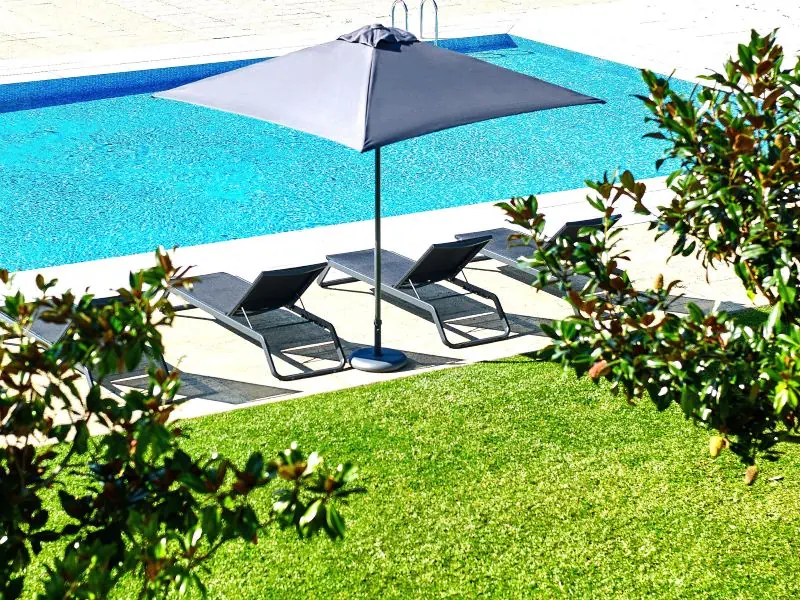
The Eolo Pureti parasol brings together sun protection, straightforward operation and a light-activated canopy coating designed to help break down pollutants and unpleasant odours. For hotels, resorts and hospitality venues, the benefits extend from the fabric overhead to the wheeled base below. Each element addresses a practical part of outdoor service, from opening the terrace in the morning to keeping the space looking presentable throughout the season.
A terrace changes throughout the day. Breakfast tables give way to afternoon drinks. Sunlight moves across the seating. Staff rearrange furniture for different groups. The Eolo Pureti parasol combines a choice of square canopy sizes with coordinated colours and mobile bases, helping venues plan shade around how their outdoor areas work.
How the Eolo Pureti parasol uses light
The canopy carries a PURETi treatment, which uses photocatalytic technology. Light activates a process at the treated surface, helping to break down certain pollutants and organic material coming into contact with the coating.
This gives the canopy an additional function beyond providing shade. The treatment is designed to help tackle airborne pollution, organic dirt and unpleasant odours. Rather than adding a separate appliance to the terrace, the technology forms part of the parasol fabric.
The process depends on suitable light, moisture and airflow. Natural daylight provides activation outdoors. Suitable artificial lighting also supports the process, although performance depends on the light source and conditions.
The useful distinction is between a treated surface and a measured improvement across an entire outdoor area. The coating provides photocatalytic activity at the canopy. A specific reduction in pollution throughout a terrace would require evidence for those conditions. For buyers, the benefit is an additional surface treatment with a defined purpose, alongside the parasol’s everyday shading role.
A self-cleaning surface with a practical purpose
Outdoor fabric faces a steady accumulation of airborne dirt and organic deposits. Above a dining terrace or poolside seating area, the appearance of the canopy forms part of the setting guests see every day.
The PURETi treatment provides a self-cleaning function by helping break down organic material on the treated surface. This supports canopy upkeep, particularly where keeping a consistent appearance matters across several parasols.
Self-cleaning describes the coating’s activity. Routine inspection and appropriate cleaning still form part of ownership. Leaves, bird droppings and other visible deposits need attention according to the care instructions. The practical approach is to combine the treated fabric with regular checks, addressing contamination before prolonged build-up makes cleaning more difficult.
UPF 80 fabric for sun protection
Shade needs substance as well as appearance. The Eolo Pureti uses fabric rated UPF 80, providing a specified level of protection against ultraviolet radiation passing through the canopy material.
For a hotel terrace, this puts fabric performance alongside the choice of colour and size. Guests sitting beneath a parasol need useful overhead coverage, whether they are eating lunch, reading beside the pool or taking a break from direct sunshine.
Positioning matters alongside the fabric rating. Sunlight reaches seating from different angles as the day progresses, so a table shaded at midday needs another look later in the afternoon. Reflected and sideways exposure also sit outside the protection offered directly through the fabric.
Planning around occupied seating, rather than the table alone, helps make better use of the canopy. Include the space taken by chairs when guests pull them back or change position.
Fabric prepared for outdoor hospitality
The canopy uses 190gsm Olefin fabric. Its specification brings together water repellency and resistance to staining, fading and mildew, addressing several pressures outdoor textiles face during a season.
Water repellency helps the fabric shed water rather than readily absorb moisture. This is useful during changeable weather, although the specification should be understood as water-repellent fabric rather than a promise of shelter in every rainfall condition.
Stain resistance supports presentation where airborne deposits and everyday terrace activity leave their mark. Fade resistance helps the fabric retain its appearance through exposure to daylight. Mildew resistance addresses another concern for outdoor furnishings, particularly during damp periods.
Together, these properties support a canopy intended for repeated outdoor use. Good care protects those advantages. Follow the specified cleaning method and allow damp fabric to dry before prolonged storage, rather than relying on material resistance alone.
Opening the terrace with fewer complications
Before the first guests arrive, staff already have tables to prepare, chairs to arrange and service areas to check. Opening parasols should fit into this routine without adding unnecessary steps.
The Eolo Pureti uses a push-up opening system with an open-lock lever handle. The mechanism provides a direct way to raise the canopy and secure the open position.
This matters where different team members share responsibility for the terrace. A straightforward mechanism gives staff a clear operating sequence to learn and follow. Across several parasols, consistency also helps make opening and closing part of an organised daily routine.
Layout still deserves attention. Leave access around the mast and sufficient clearance for the canopy to open without catching nearby furniture or structures. Ease of operation delivers its full benefit when the surrounding space supports the movement.
A wheeled base for changing layouts
Outdoor seating rarely follows one arrangement for an entire season. A quiet breakfast service and a busy afternoon gathering place different demands on the same terrace.
The colour-coordinated wheeled base makes repositioning easier. This gives venues flexibility to adjust shade alongside furniture changes or move a parasol away from an area needed for another purpose.
For example, a venue might change the spacing between tables for a group booking, then restore smaller seating arrangements afterwards. A mobile base supports those changes without treating every parasol position as permanent.
Plan movement around the surface and available routes. Steps, uneven paving and narrow gaps affect how practical repositioning will be. Follow the handling instructions and assess the intended location before moving the parasol. Mobility is most useful where the terrace layout makes movement straightforward.
Three sizes to suit different spaces
The Eolo Pureti comes in 2m, 2.5m and 3m square canopy sizes. This gives buyers a choice between more compact coverage and a larger overhead footprint.
A smaller canopy suits a more restricted position where surrounding furniture or walkways limit available space. A larger canopy offers broader coverage where the seating arrangement allows sufficient clearance.
Square canopies also offer a clear shape around which to plan rows of tables, repeated seating areas and sun-lounger settings. Their straight edges help establish an orderly layout, especially where several parasols sit within the same terrace.
Choose the size against the occupied area and surrounding circulation. Measure chair positions, service routes and nearby obstacles. The best fit balances useful shade with enough room for guests and staff to move comfortably.
Coordinated colour from canopy to base
The product brief presents white, taupe and anthracite finishes, with a matching lacquered frame and mobile base. This creates continuity across the complete parasol rather than leaving the support equipment visually separate.
White gives a lighter appearance alongside pale furniture and poolside surroundings. Taupe works with warm paving, timber and neutral upholstery. Anthracite provides a darker finish alongside contemporary metal furniture and architectural details.
The choice becomes more noticeable when several parasols share one space. Repeated colours and coordinated bases help create a consistent terrace scheme.
View samples alongside existing materials before deciding. Paving, seat fabrics and building finishes influence how a colour appears outdoors. A choice made against the full setting is more useful than selecting the canopy in isolation.
Durability and recyclable construction
The frame uses corrosion-resistant materials intended for long-term outdoor performance. Alongside the resistant canopy fabric, this addresses the practical need for equipment suited to repeated hospitality use.
The construction is also described as fully recyclable. This gives venues an end-of-life consideration to include in purchasing decisions, alongside appearance, operation and maintenance.
Recyclable construction needs a suitable disposal route when replacement eventually becomes necessary. Confirm how the different materials should be separated and accepted locally. Keeping product information with maintenance records helps preserve those details for future staff.
The environmental benefit deserves specific language. Recyclability and a photocatalytic coating are defined features. Neither feature alone establishes the overall environmental impact of manufacturing, transport and use.
Design recognition and project support
The Eolo Pureti has received the iF Design Award, Red Dot Award and Nestlé Sustainability Award. These recognitions add context to a design combining outdoor shade, material choices and surface technology.
For a hospitality buyer, the final decision still comes down to the venue. Canopy size, access, exposure, furniture spacing and daily handling determine how well a parasol fits the location.
For help assessing those details, contact Morton Commercial Parasols about specification, configuration and installation requirements. Bring measurements and photographs showing the intended positions and surrounding space.
The Eolo Pureti brings several benefits into one piece of terrace equipment. Their value becomes clearest in daily use: useful overhead protection, manageable operation, adaptable positioning and materials selected for outdoor conditions. A well-planned layout allows each feature to serve a practical purpose.